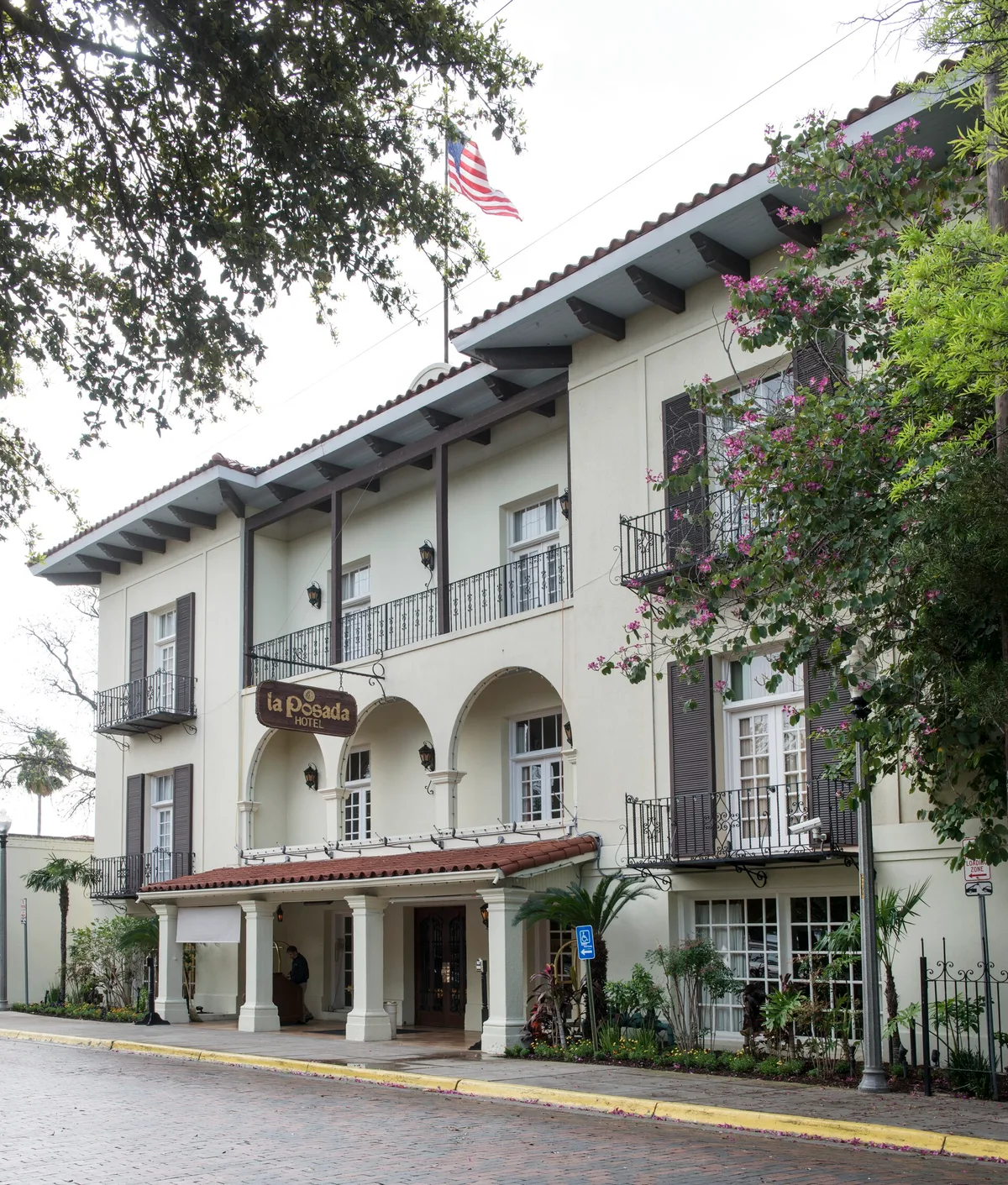
Boutique hotels are small, independently styled properties that trade on design and personality rather than scale and brand standards. There is no fixed industry definition of how many rooms one has, but the pattern is consistent: fewer rooms, a strong design point of view, and service shaped by the owner rather than a manual. The word itself is borrowed from retail, and the borrowing is precise.
According to Wikipedia, a boutique is a retail shop dealing in high-end, fashionable goods, and the word is French for "shop". The same entry notes that even some multi-outlet chains can be called boutiques when they target small, upscale niche markets — which is exactly what happened in hotels. Big brands now run "boutique" collections of their own, which makes the term a style claim as much as a size claim.
For operators, the comparison matters because it is a choice between two business models, not two decorating budgets. A boutique property sells uniqueness and service. A chain sells predictability, distribution and scale. Both can be profitable. They are profitable in different ways.
What actually makes a hotel "boutique"?
Strip away the marketing and three things separate a boutique hotel from a chain property: ownership structure, room count and design intent.
Most boutique hotels are independently owned or part of a small collection, so the owner's taste shows up in the lobby, the bar list and the staff handbook. A chain hotel, by contrast, follows brand standards written by someone who has never seen the building. Delta Quattro has covered how far those standards reach in why the brand dictates the bathroom — down to the fixtures in the guest bath and the cycle that forces renovations on a schedule.
Room count is the second marker. The term implies a small inventory, small enough that the general manager knows the property the way a restaurateur knows a dining room. There is no universal threshold, and any specific number you read in a marketing brochure is a positioning choice, not a rule.
The third marker is design intent. In a boutique, the design is the product. The lobby is a place people photograph, the restaurant is a destination in its own right, and the materials are chosen for character as much as durability. That logic has a direct parallel in retail: as one trade explainer puts it, boutiques stock smaller, style-focused collections while regular stores carry high-volume, trend-based inventory aimed at the masses, according to Truekung's primer on boutiques. Swap "inventory" for "rooms" and you have the hotel version of the same argument.
How does service differ from a big brand?
Chain service is standardized on purpose. You check in the same way in Singapore as in Stuttgart, because the brand has written the sequence and audits it. That is a feature for travelers who value predictability — and for owners, it is what makes a chain flag sellable and financeable.
Boutique service is personal by design. Fewer rooms mean fewer guests per staff member, so a concierge can actually remember that you asked for a late checkout. The retail analogy holds here too: boutiques offer personal, engaging service, while regular stores run self-service and transactional interactions, per the Truekung comparison. In hotel terms, that is the difference between a doorman who knows your name and an app that knows your room number.
The trade-off is consistency. A boutique's best week can beat any chain, and its worst week can be worse than any chain, because there is no manual and no regional auditor smoothing the outliers. Chain guests are buying the floor. Boutique guests are buying the ceiling.
What does the price comparison look like?
Price is where the two models diverge most clearly, and where general knowledge has to stand in for a rate card, because rates move by city, season and night.
The pattern, not the number, is what matters. Boutiques price on exclusivity, craftsmanship and service rather than on cost alone — the same logic that lets a small retail shop charge more for a limited run than a mass retailer charges for a similar item. In hotels, that premium buys a specific room type rather than a category code, a restaurant people cross town for, and interiors that were designed rather than specified.
Chains compete on the other side of the ledger. Their size buys procurement power, loyalty-program distribution and the ability to fill rooms at lower rates in slow weeks. For an operator, the honest framing is this: a boutique needs fewer guests, each paying more and returning often. A chain needs a full pipeline, every night, at rates the brand's distribution can support.
There is also a cost side guests never see. Independent design-forward properties carry design and maintenance burdens without a brand's purchasing contracts. Delta Quattro has looked at where those budgets break in FF&E procurement — furniture, finishes and equipment are where an independent's fit-out most often overruns, precisely because there is no brand-standard contract to hold the line. We covered a connected angle in FF&E procurement: where hotel furniture budgets blow up, and the contract terms that hold the line.
Where does each model win?
A genuine comparison needs a table, so here is the honest version, stated in terms of model rather than invented figures.
| Dimension | Boutique hotel | Chain hotel |
|---|---|---|
| Differentiation | High — design and owner identity are the product | Low by design — consistency is the product |
| Service style | Personal, relationship-driven | Standardized, audited |
| Pricing logic | Premium for uniqueness and craft | Rate supported by distribution and loyalty |
| Worst-case risk | One bad season or one bad review cycle hurts directly | Brand buffer absorbs local shocks |
| Cost control | Independent procurement, no scale discount | Brand contracts and purchasing power |
Design is the boutique's main weapon, but it is also its main maintenance line. A bold interior ages in public. Delta Quattro's piece on lifestyle hotel branding makes the point that when the design is the brand, keeping the design current is a recurring cost, not a one-time spend. Chains face the same physics through their renovation cycles — they just schedule it.
Acoustics, lighting and flow are where small properties can outperform without spending like a chain. With fewer rooms, a boutique can afford per-room lighting design and quiet corridors, the details guests never praise but always review, as covered in hotel acoustics. A 400-room property buying the same per-room quality pays a very different bill. For related coverage, see Hotel acoustics: the design discipline guests never praise but always review.
What this means for operators and owners
Our analysis, reading the two models side by side: the boutique label is easy to claim and hard to run. The word carries retail DNA — small, curated, personal, priced on character — and the hotel version succeeds when the operation behind it matches the promise. A small property with standardized service and catalog furniture is a small chain hotel with better photography.
For owners deciding between the paths, the questions are practical. Can the property sustain a design refresh cycle without brand support? Can staffing hold personal service at occupancy peaks? Is the location strong enough to fill rooms without a loyalty program feeding demand? If the answers are yes, the boutique model's premium pricing can carry the thinner scale. If not, a flag — or a soft-brand collection that supplies distribution while leaving design freedom — is the defensible choice.
What remains unknown is the exact price gap in any given market, because rates move nightly and no single figure survives a season. What the evidence does establish is the structure of the trade: boutiques sell character at a premium and absorb their own risk; chains sell predictability at scale and charge for it in fees and uniformity. Guests choose between them every night. Operators should choose deliberately, not by default.