Boutique hotel trends rarely stay boutique for long. Small chains test an idea at a handful of properties, watch how guests and margins respond, and the winners get absorbed into the mainstream. The pattern repeats across design, service models and technology: the small brand experiments, the large brand standardizes.
For operators, this matters because the big chains' playbooks are usually a season or two behind the independents. Reading the boutique segment is a cheap way to see which ideas are about to become table stakes. This piece explains why small brands lead, where the influence shows up first, and what the copycat cycle means for budgets.
Why do small brands move first?
The answer is structural, not stylistic. A boutique chain with a dozen properties can redesign a breakfast program or relaunch a lobby concept in one season. A brand with hundreds of properties has to sequence the change across owners, franchisees and brand standards, and each step adds months.
Decision distance matters too. In a small chain, the person who notices a guest complaint can often approve the fix. In a large organization, the same observation travels through regional management, brand committees and capital review before anything changes. Smaller brands also carry less reputational risk per experiment. A failed concept at one property is a lesson; the same failure across a flagship portfolio is a headline.
There is a financial shape to it as well. Boutique operators tend to run fewer, more distinctive assets, so a single property's performance moves the whole company's numbers. That makes them quicker to kill what does not work and quicker to scale what does.
Where does boutique influence show up first?
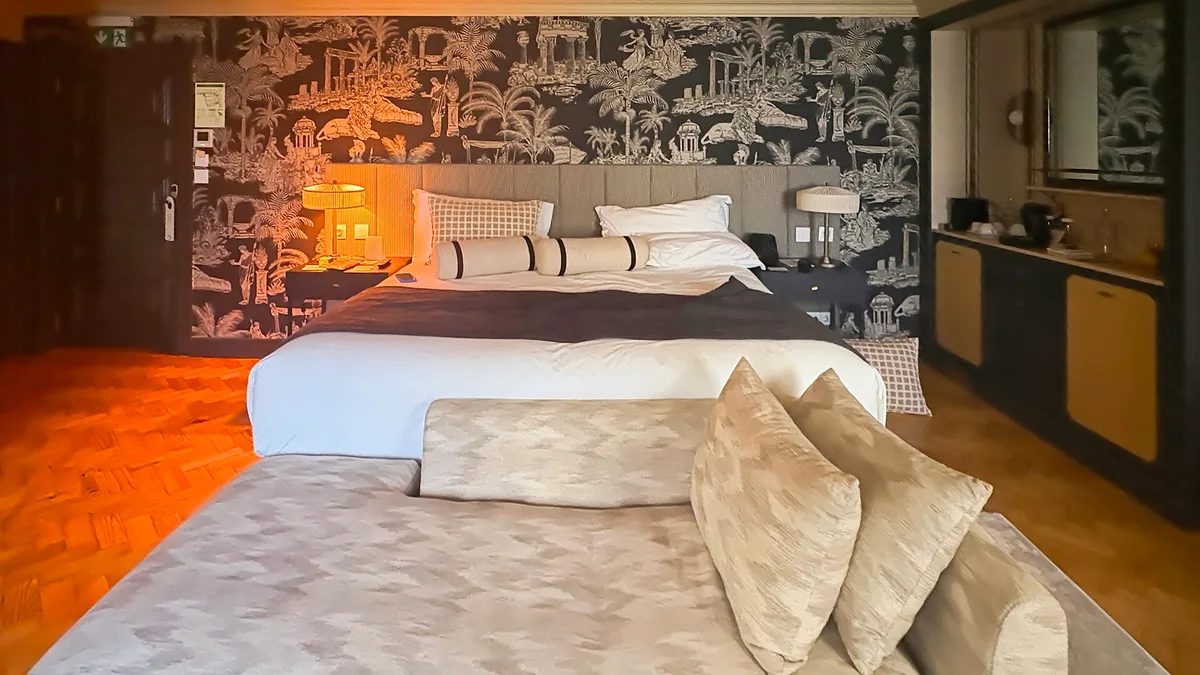
Design is the most visible channel. Independent and small-chain properties treat the lobby, the bar and the room as a single narrative, and that approach has migrated steadily into the mainstream. Large brands now launch lifestyle flags precisely to capture the guest who would otherwise book an independent. Conversions of existing buildings into design-led properties have become a major part of brand growth pipelines, a shift covered in our piece on how conversions, not ground-up builds, are driving the 2026 hotel pipeline. Readers following this should also see Conversions, not ground-up builds, are driving the 2026 hotel pipeline.
Design rigor itself is the export. The best boutique operators sweat details a commodity property would never cost out: the chair a guest actually sits in, the light at the desk, the weight of the door handle. That obsession with ergonomics has parallels elsewhere in travel. RECARO, the German seating specialist headquartered in Schwäbisch Hall, describes its aircraft seats as deliberately lightweight and ergonomically shaped, with pre-defined tilt for relaxed seating — an approach where every centimeter and every gram is engineered against a measurable outcome. Hospitality design is converging on the same discipline: fewer, better objects, chosen for how the body experiences them.
Service models travel the same road. Opt-out housekeeping, mobile check-in, text-based guest messaging and locally sourced food and beverage all began as boutique or independent experiments before chains wrote them into brand standards. Each one, once proven, becomes an expectation rather than a differentiator.
What does the copycat cycle mean for operators?
For operators, the math changes at the margin. When a boutique idea is still fresh, it commands a rate premium because guests cannot get it elsewhere. Once a major chain adopts it, the premium erodes and the feature becomes a cost of staying competitive. The practical question is therefore timing: adopt early and pay for differentiation, or wait and pay less for parity.
Our analysis suggests the deciding factor is whether the idea touches cost structure or only perception. Design refreshes are mostly perception, and parity arrives fast. Labor model changes — housekeeping on request, cross-trained teams, technology that shifts tasks off the front desk — change the cost base, and those are worth studying early. Our coverage of what opt-out housekeeping programs do to labor cost is one example of how a service model shift lands on the P&L before it lands in brand standards. This connects to our earlier piece, Housekeeping on request: what opt-out programs do to labor cost.
Measurement closes the loop. Operators evaluating a boutique-originated idea should anchor it to the metrics they already track, from occupancy and rate to the profit measures covered in our explainer on GOPPAR. A design change that lifts rate but not profit is a styling exercise, not a strategy.
What should large-chain operators watch in the boutique segment?
Three signals are worth tracking, none of which require a research subscription.
- Repeat-guest behavior. When corporate travelers start booking a boutique property by choice rather than by exception, the segment is serving a demand the big brands are missing.
- Rate persistence. A boutique property that holds premium rates through shoulder seasons is demonstrating durable differentiation, not a launch spike.
- Staffing stability. Small brands that retain staff tend to compete on service depth rather than wage level alone, and retention economics are transferable at any scale.
Each signal points at the same underlying asset: a brand identity strong enough that guests notice its absence elsewhere. That is what the large chains are ultimately buying when they launch or acquire lifestyle flags.
The takeaway for hotel operators
Boutique chains set the agenda because their structure rewards speed: few assets, short decision paths and high sensitivity to guest response. Large operators should not try to imitate that speed. They should instead build a deliberate listening post — watch which boutique ideas survive contact with rate and profit data, and adopt those on their own timeline.
The evidence for any given trend still has to be checked property by property, market by market. What the pattern establishes is direction, not proof: today's independent experiment is frequently next year's brand standard, and the operators who treat the boutique segment as a leading indicator rather than a niche will budget for change before it is mandatory.