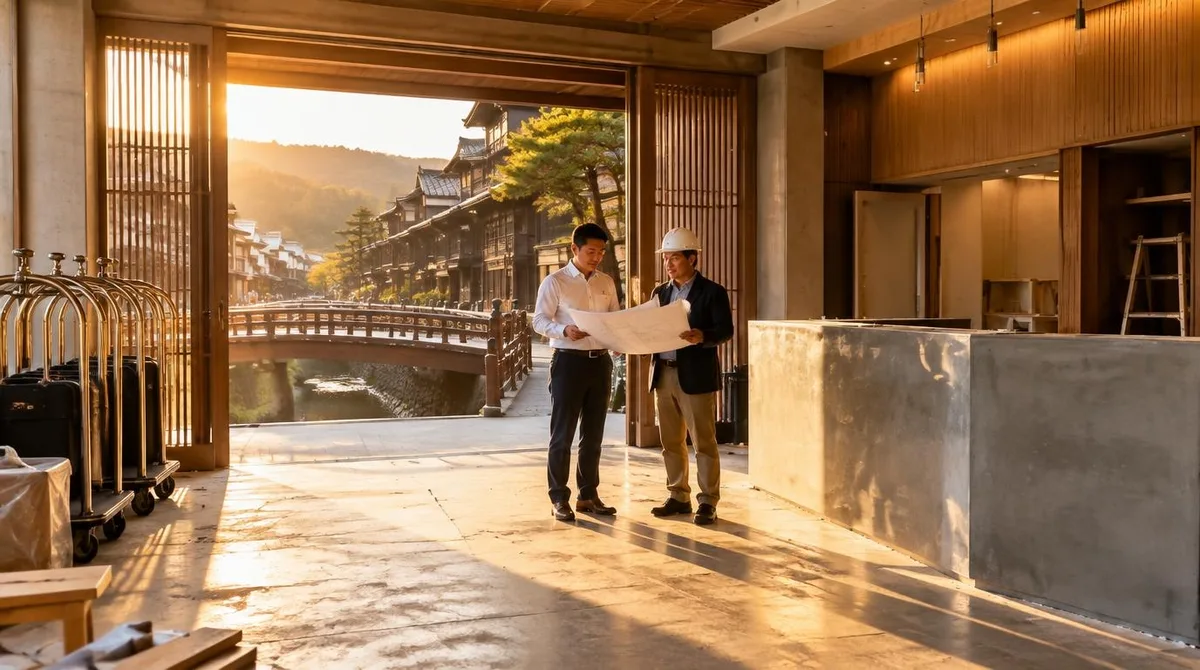
Pacifica Hotels GK has signed a franchise agreement with Marriott International to bring the Courtyard by Marriott brand to Takayama, Gifu. The property, Courtyard by Marriott Hida Takayama, is scheduled to open in 2028 with 207 rooms and suites, according to Hotel Management Network.
For operators, the interesting part is not the brand name. It is the structure behind it: an independent third-party management company, not Marriott itself, running an international branded hotel in a regional Japanese market. The Takayama signing is a case study in how that structure works.
Pacifica is a third-party operator of international branded hotels in Japan. It manages properties under franchise agreements with Marriott International and IHG, and its operating portfolio includes City Express by Marriott, Courtyard by Marriott, Fairfield by Marriott, Garner by IHG, Holiday Inn & Suites, and Moxy. Hotels run this way sit between two contracts: the owner holds the asset, the brand holds the flag, and the operator runs the daily business.
What exactly was signed?
A franchise agreement, not a management contract owned by the brand. Pacifica Hotels GK, as the third-party operator, signed directly with Marriott International to introduce Courtyard by Marriott to Takayama. The hotel will carry the brand's name and standards, but Pacifica staffs and runs it.
That distinction matters commercially. Under a franchise, the operator pays the brand for the flag and the systems. Our explainer on franchise fees and the 10-15% question walks through how those deductions work. For a regional property with 207 keys, that arithmetic shapes whether the deal works at all. We covered a connected angle in Franchise fees explained: royalty, marketing fund, reservation fees — and the 10-15% question. We covered a connected angle in Franchise fees explained: royalty, marketing fund, reservation fees — and the 10-15% question.
Where is the hotel, and what will it offer?
The site sits near Takayama Station, within reach of the city's main thoroughfare, heritage locations and local eateries. Takayama is a heritage destination, and the source quotes Pacifica CEO Seth Sulkin calling it home to "the best collection of Edo period structures anywhere I have seen in Japan," alongside food and day-trip access to Shirakawa-go and Kamikochi.
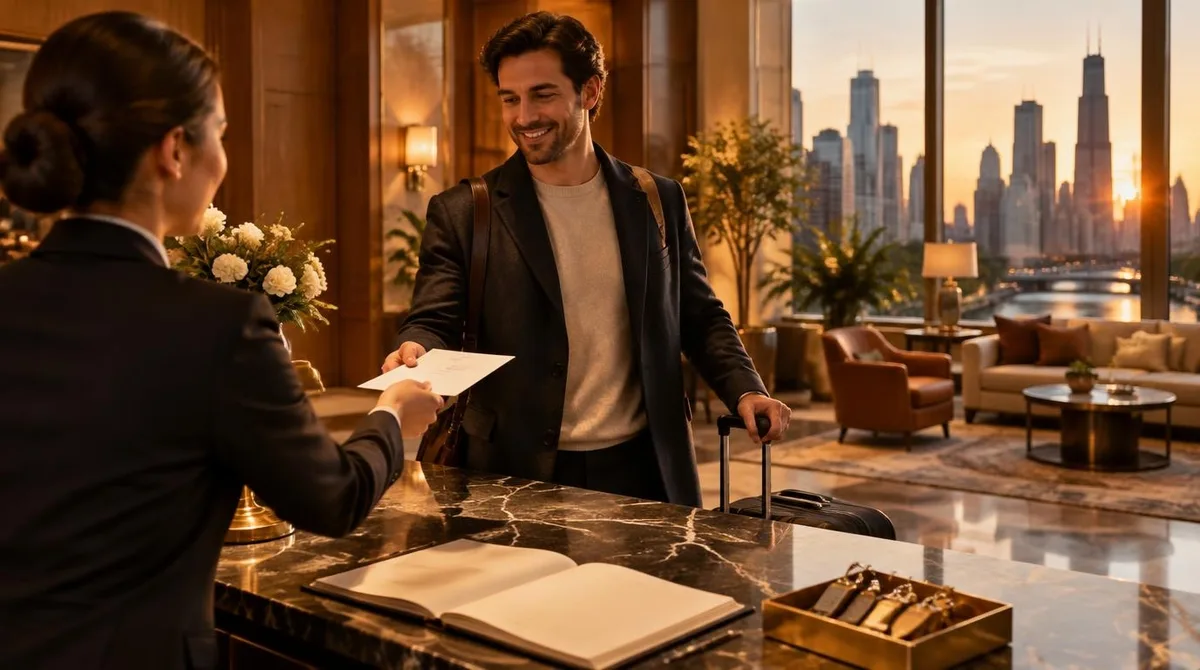
The planned product follows the Courtyard template: 207 rooms and suites, adaptable communal areas intended for both working and resting, and an all-day restaurant with semi-open kitchens serving Japanese and international dishes. A station-adjacent location with flexible public space reads as a bid for both leisure travelers and working guests — the segment our piece on what actually matters in a business traveler's room covers in detail.
Why Takayama, and why now?
Sulkin's own framing is a demand argument. He described Takayama as one of his personal favorite destinations in Japan, citing the Edo period architecture, the food scene, and its role as a base for day trips to Shirakawa-go and Kamikochi. An operator's CEO praising a market is a statement about that operator, not independent market research — but it signals where Pacifica sees durable visitor demand.
The supply side is the other half. Heritage cities with limited large-format room stock are exactly where an international midscale-upper flag can differentiate. Whether the brand standard survives contact with a heritage-market guest is the question the 2028 opening will answer.
Is this part of a wider Pacifica push?
Yes. The Takayama signing is one of three recent moves the report ties together:
- Courtyard by Marriott Hida Takayama — 207 rooms and suites, opening 2028.
- Courtyard by Marriott Hiroshima — slated to open next year, per the report.
- Westin Hokkaido Furano Resort — signed last month by Pacifica and its subsidiary Furano Hospitality, scheduled to open in mid-2029 with 195 guest rooms and suites, and set to be the first Westin Resort location in Japan.
The pattern is consistent: one operator, multiple Marriott and IHG flags, added property by property. The IHG side of that playbook is visible elsewhere in the region too, as our look at IHG's sixth Garner signing in India shows — conversions and new signings that stay unproven until doors open. For related coverage, see IHG signs a sixth Garner in India, but the Jim Corbett bet stays unproven until 2027. For related coverage, see IHG signs a sixth Garner in India, but the Jim Corbett bet stays unproven until 2027.
What does this mean for operators?
Three takeaways. First, third-party operation is one established route for international brands in Japan, as Pacifica's multi-brand portfolio under Marriott and IHG franchises illustrates. Second, regional heritage markets are now on the flag map, not just Tokyo and Osaka. Third, every one of these signings is a projection — renderings, room counts and opening years are plans, not performance.
The loyalty economics underneath matter as much as the signage. A Courtyard in Takayama plugs into Marriott Bonvoy's demand engine, and our analysis of who funds the points and who captures the guest explains why operators accept that trade. For now, the facts on the record are the agreement, the 207 rooms, the station-side site and the 2028 date. Everything else stays a rendering until the building exists.