Small space design in lodging has a working prototype: the capsule hotel, a Japanese format built around bed-sized rooms and shared amenities. The capsule hotel reference dates the first property to 1979, when the Capsule Inn Osaka opened in the Umeda district with a design by Kisho Kurokawa. Rates run cheap by intent, usually around 2,000 to 4,000 yen, or USD 18 to 36, a night.
The format matters to operators because it trades room area for price and turns shared space into the product. The microapartment record shows the same trade working in housing, where small units often earn more per square foot than large ones. Land and construction costs push both sectors toward the same question.
What is a capsule room, exactly?
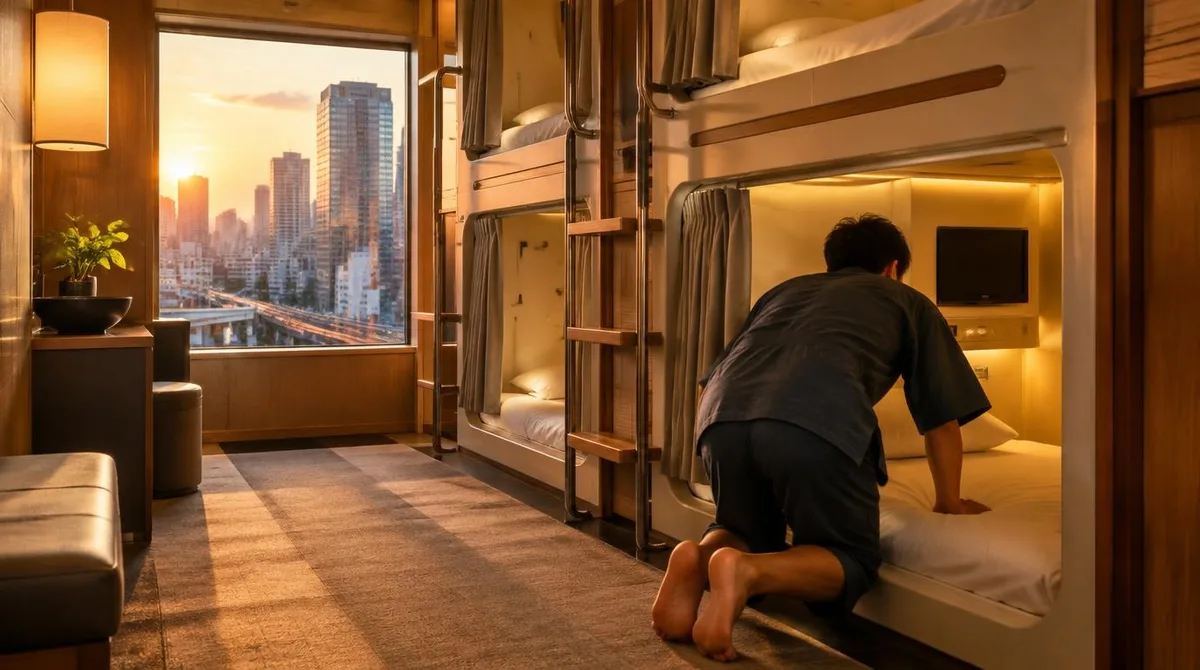
The chamber is roughly the length and width of a single bed, with height to crawl in and sit up. Walls come in wood, metal, fibreglass or plastic. The kit inside stays short: a small television, air conditioning, an electronic console and power sockets.
Units stack side by side, two high, with steps or ladders to the top row, much like bunks. A curtain or solid door closes the open end, and the door locks from the inside only. House rules follow the format: no smoking or eating inside, a yukata and slippers at entry, luggage in lockers.
How does the space economics work?
The housing data puts numbers on the trade. A microapartment fits sitting, sleeping, a bathroom and a kitchenette into 14 to 32 square metres, or 150 to 350 square feet. Canadian usage draws the line at micro-units under 500 square feet and nanounits under 200. Vancouver bylaws hold condos to a 398 square foot minimum and rentals to 320.
The money case is documented too. Micro-units often command a higher rent per square foot than larger sizes, and developers cite housing affordability, land prices and construction costs as reasons to build them. Capsules run the same math in lodging: 50 to 700 rooms on a small footprint.
What does the format change about staffing and turnover?
Service concentrates. Toilets, showers, wireless internet and dining sit in shared space, so the daily work gathers at a few points instead of spreading across hundreds of private bathrooms. Entry handles the personal kit in one step, with the yukata exchange and locker storage replacing closet service.
Turnover stays high but simple. The room is a bed, a console and a curtain, so a turnaround touches little. The demand record also shows depth: during the Great Recession, some workers rented capsules by the month, and as of 2010 such guests made up 30 percent of visitors at the Capsule Hotel Shinjuku 510 in Tokyo. For related coverage, see Transforming hotel rooms: flexible design that sells one room as three configurations.
What carries over to western limited-service?
The format has already traveled. The reference lists capsule properties in Belgium, Canada, China, Hong Kong, Iceland, India, Indonesia, Israel, Poland, Saudi Arabia and South Korea, and the Anglosphere knows the type as the pod hotel.
Three transfers fit limited-service economics without copying the pod. Fold-down beds, folding desks and hidden appliances shrink a room's footprint, straight from the microapartment kit. Locker luggage storage frees entry space at select-service desks. And the communal trade comes from micro-housing: shared kitchens or lounges in place of private floor area.
Where are the limits of the format?
The customer base has edges. Capsule hotels primarily cater to men, though some properties run separate sections, floors or elevators for female guests. The classic user was the salaryman who missed the last train, not a family. The chamber fits one person and one small bag.
Downturn risk shows on the housing side: micro-condos are more likely to become unsold inventory when the property market turns. Regulation binds too, as Vancouver's square foot minimums show. Small space design wins on cost until a market, or a code, sets a floor under size. We covered a connected angle in Office-to-hotel conversion: what the cost data actually shows.
Conclusion: what should operators borrow?
Borrow the accounting first. Count revenue per square metre against the land and construction costs behind it, the way the micro record does. Then borrow the kit: fold-away furniture, hidden appliances and locker storage, all documented in the references above.
The communal trade comes last, because it changes the product. A shared lounge or kitchen earns its floor area only when guests accept the swap, as the capsule price band shows. Small rooms sell. Small rooms plus the right shared space sell better.