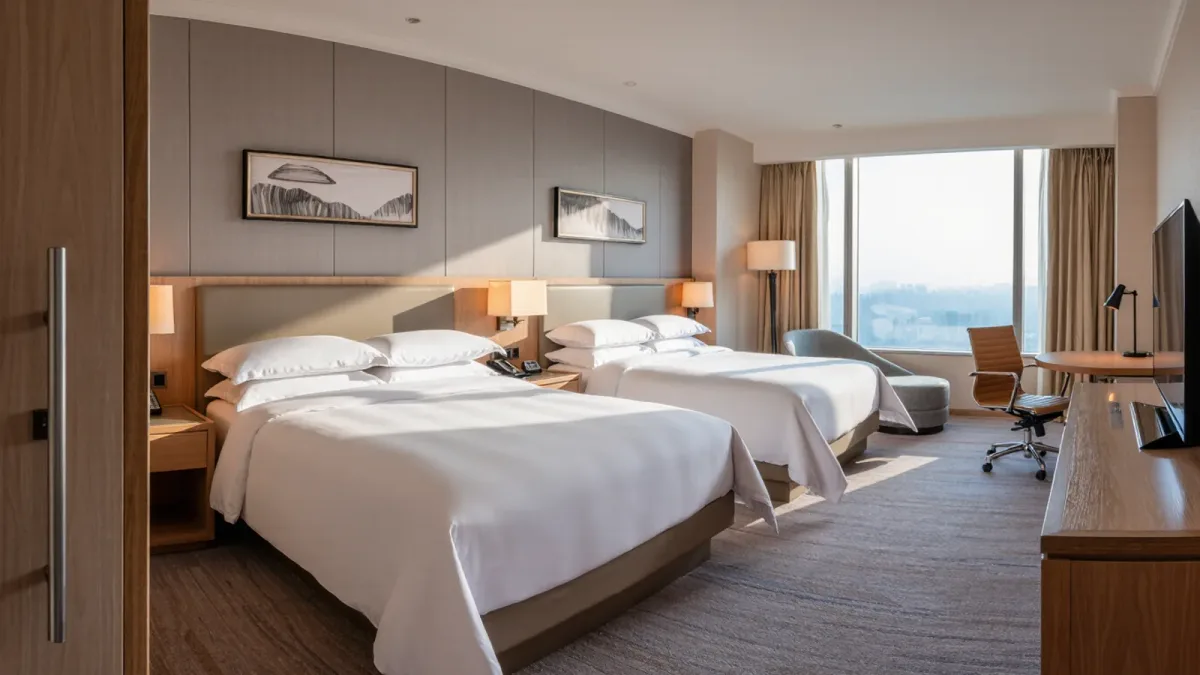
Hotel brand design standards are the contractual specifications a franchisor imposes on a property's physical product: room dimensions, furniture specifications, finishes, lighting levels, signage, even the position of outlets and the type of soap dispenser. They exist so that the promise a guest buys — I know what this brand delivers — is physically true in every property wearing the flag.
For owners, standards are simultaneously the value of the franchise and its recurring bill: the property improvement program, or PIP, is how the bill gets collected.
What do brand standards actually specify?
More than outsiders assume. A brand's design standards manual typically covers: room and bathroom dimensions and required furniture quantities; FF&E specifications and approved vendor lists; finish palettes and material quality tiers; lighting design requirements; corridor and public area layouts; signage, wayfinding and brand collateral placement; back-of-house minimums; and increasingly, accessibility, sustainability and technology baselines — bandwidth, door locks, TV platforms.
The manual is a compliance document with a design aesthetic attached. Compliance is audited: brand inspectors visit, score the property against the standards, and write findings that convert into required corrections.
What is a PIP and when does it land?
A property improvement program is a schedule of required renovations — rooms, corridors, public areas — that a franchisor imposes at defined triggers: at agreement signing, at renewal or term milestones, after a brand refresh launches, or after inspections score the property below threshold. The owner funds the PIP; the brand defines it. Timing is the negotiable element — scope dates, phasing and occasionally brand cost participation in the form of fee relief during the renovation period.
The economics are two-sided. PIPs protect the asset value every franchised owner depends on — a flag that lets properties decay is selling a failing promise. But poorly timed PIPs, imposed into weak markets, have pushed owners to litigation and to flag switches; industry coverage of franchise disputes is dominated by exactly this tension. Franchisee associations, such as the American Hotel & Lodging Association's ownership community and dedicated franchisee groups, negotiate over PIP fairness as a standing agenda item.
Soft brands: the middle path?
The major groups' soft-brand collections — design-led collections that trade strict prototype compliance for curated individuality — emerged precisely to serve owners whose properties could not wear a prototype. Soft brands set quality thresholds, story requirements and design guardrails rather than furniture schedules. They broaden the franchise market to independent buildings, and they signal where the standards apparatus is heading: toward outcome requirements with flexible means.
Standards are why a brand room looks like the brand room — and why the owner's capital plan has a line the owner did not choose. Reading the standards manual before signing, not after the first inspection, is the discipline that keeps that line manageable.