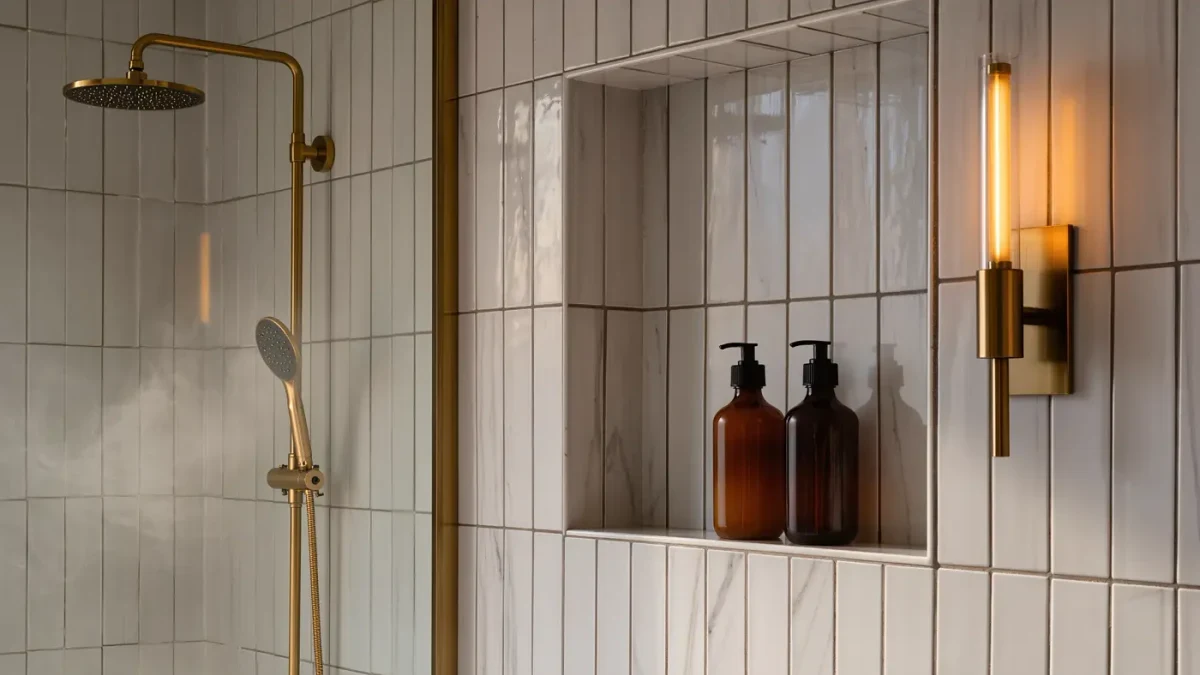
A hotel bathroom is the most expensive space per square meter in the guest room: plumbing, waterproofing, ventilation and tiling concentrate construction cost in a small footprint, and it is the area of the room where operating problems — leaks, clogs, mold, scald risk — are most likely to become maintenance tickets or, worse, damage claims. Both facts push specification in the same direction: fewer failure points, durable surfaces, efficient fixtures.
Bathroom design in hotels is therefore an economics exercise wearing a design costume.
Tub or walk-in shower?
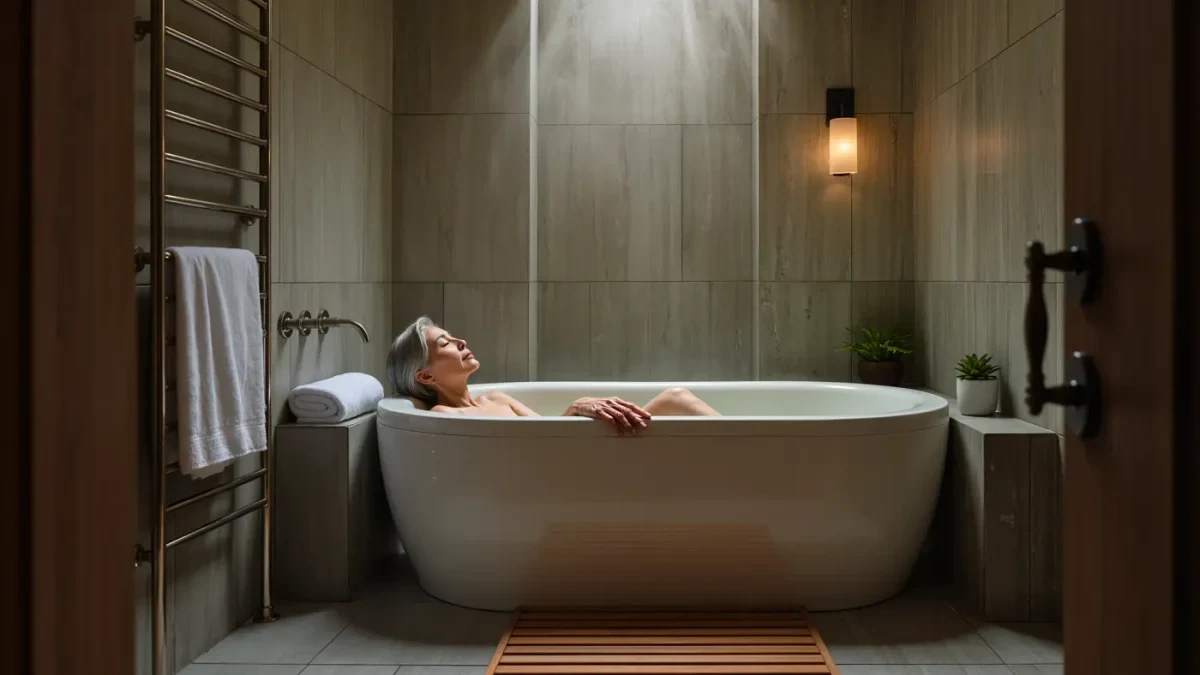
The industry has largely answered. Walk-in showers have become the default in new-build and renovated rooms outside luxury and family segments: they use less floor area, less water per use, less housekeeping time per turn, and they remove the tub's two chronic problems — cleaning labor and slip-into-a-tub injury exposure among older guests. Tubs persist where the brand requires them and in segments where families with small children or soaking guests are the target; some properties keep a small share of tub rooms to cover both demands.
The conversion math that tipped the market: a deleted tub lowers first cost slightly, lowers water and energy per occupied room measurably, and shortens housekeeping minutes in a department where minutes are payroll.
What do efficient fixtures actually save?
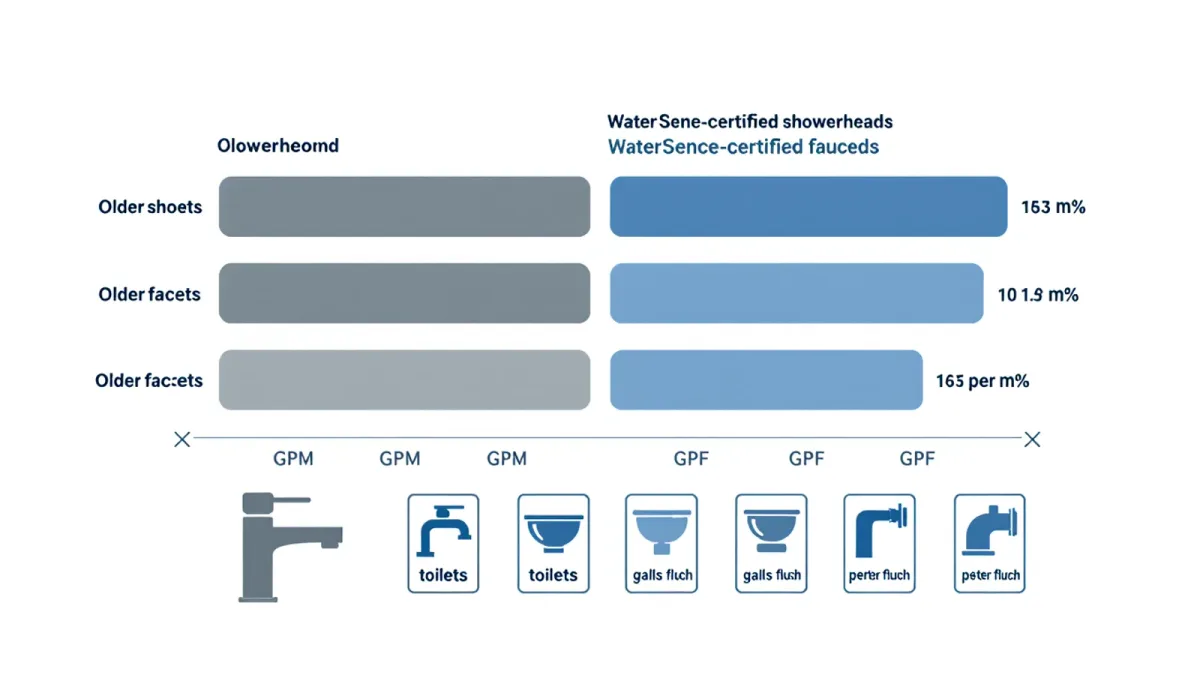
Real, regulated numbers. US Environmental Protection Agency WaterSense-labeled fixtures — the program's efficiency certification — cover showerheads using no more than 2.0 gallons per minute versus a common older standard of 2.5, and faucets and toilets with comparable reductions. Across a property's occupied room-nights, the percentage saving on hot water is a direct energy saving too, since most of the reduction is hot water. Operators in water-stressed markets add a second motive: local utility programs frequently rebate certified fixtures, shortening payback further.
The design constraint is perception: guests judge shower quality by pressure experience, not gallons. Well-engineered low-flow heads are the specification task; a bad one shows up in reviews within a quarter.
What does accessibility require — and why does it help everyone?
US law sets the floor: the ADA standards require accessible guest rooms in defined proportions, with bathrooms among the most specified spaces — clear floor space, grab bars, reachable controls. Operators who treat accessibility as a compliance bolt-on miss its commercial use: zero-threshold showers, lever handles and grab-bar-ready walls serve aging travelers, families and guests with temporary injuries — a market far wider than the legal definition. Building the features into the standard specification, rather than reserving them for accessible rooms, costs little at design time and cannot be retrofitted cheaply.
What fails in operation?
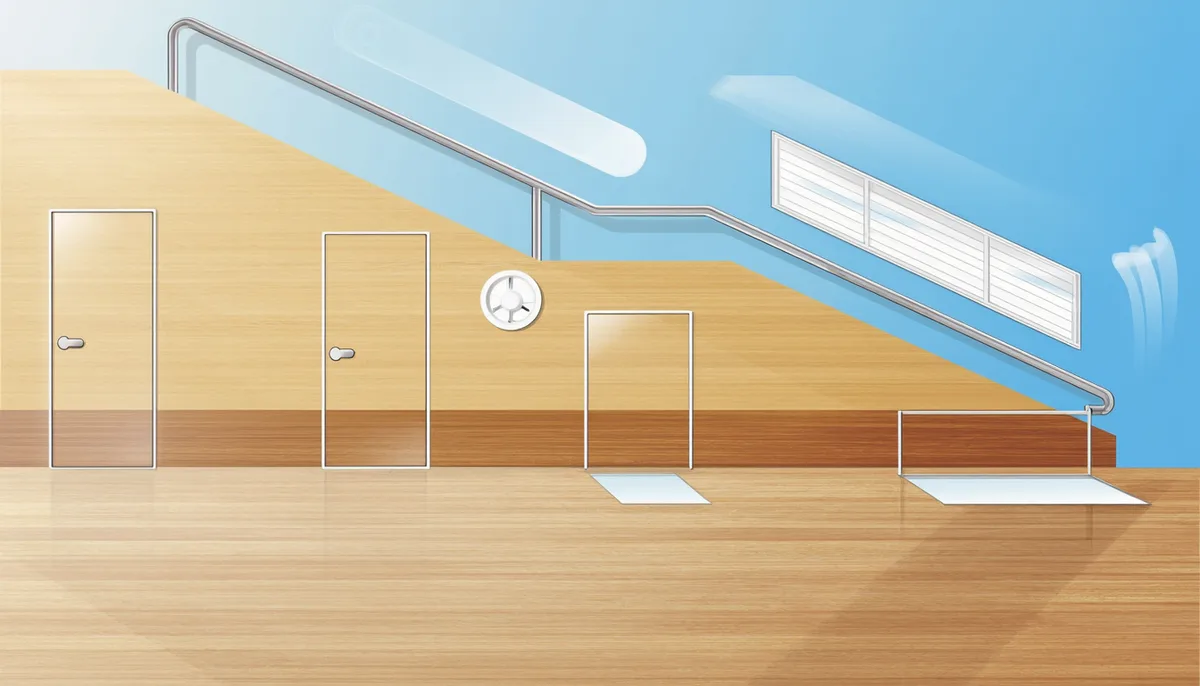
The recurring tickets are waterproofing failures at joints and penetrations, ventilation undersized for shower loads, grout and silicone aging, and mixed-valve temperature complaints. Specification answers exist for each: membrane systems over paint-on hope, ventilation sized to the actual airflow path, large-format tile minimizing grout lines, and thermostatic or pressure-balanced valves as standard. Each costs marginally more installed and repays in tickets avoided.
The bathroom is where the room's construction budget, its utility bill and its review score intersect. Operators who specify for failure points first, aesthetics second, get both.