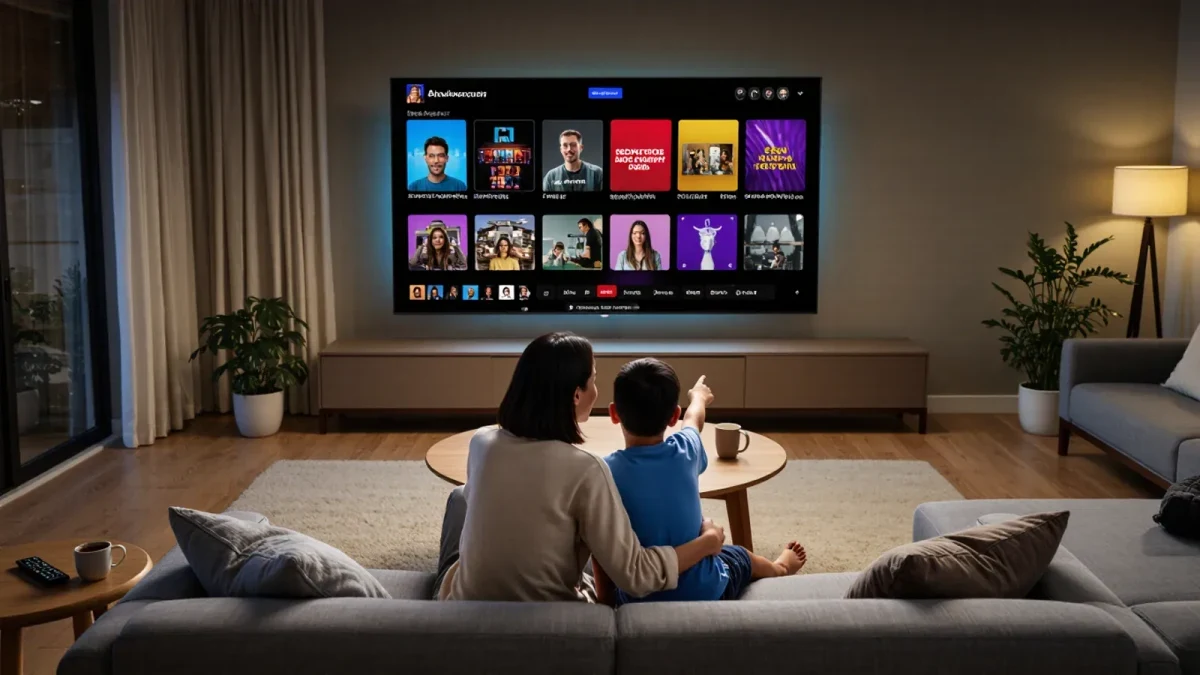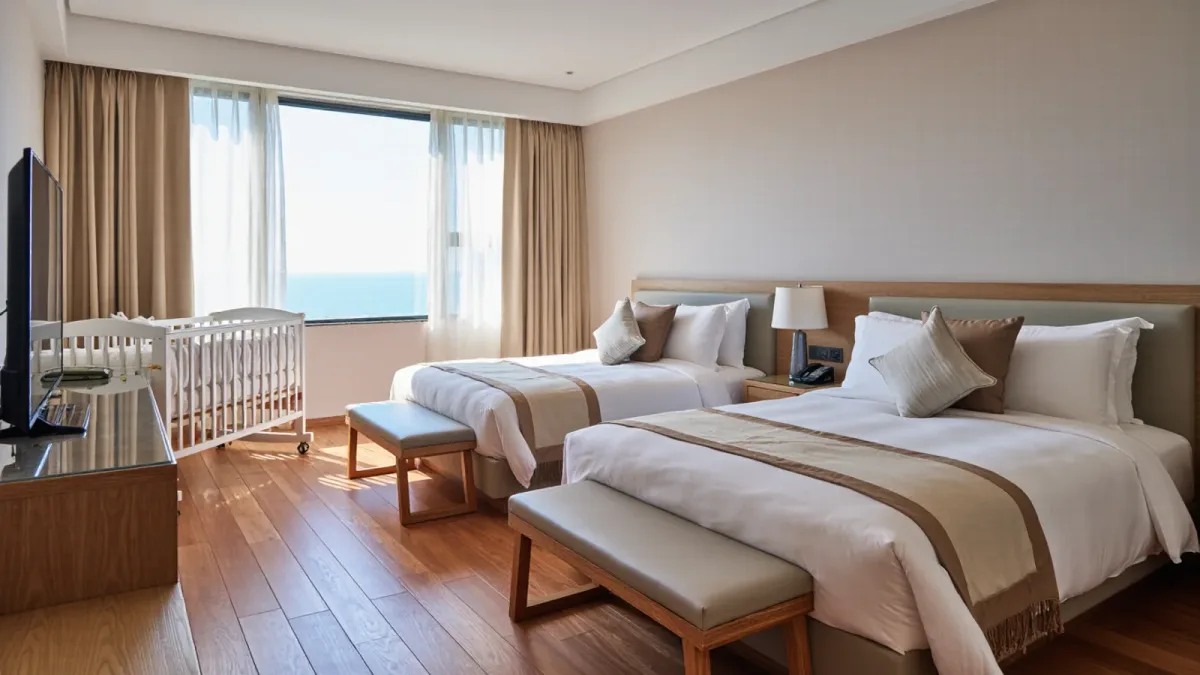
A family hotel stay is won or lost on configuration. Two adults and two children exceed the standard two-queen room's occupancy limit at many US properties, which forces the choice between a suite, connecting rooms, a rollaway that may not be permitted, or booking two rooms the family cannot legally share. Parents evaluating a hotel are therefore solving a spatial puzzle before they ever look at rates — and the properties that publish bed maps, occupancy rules, and connecting-door availability clearly capture bookings that others lose to phone calls and cancellations.
The demand is large and persistent: family leisure travel anchors school-holiday seasons in every major market, and travel security and logistics guidance for families — from the TSA's rules for traveling with children onward — reflects how much planning parents already invest before arrival. The room either completes that plan or undoes it.
How do occupancy rules actually work?
Occupancy limits combine fire code, brand standards, and rate design, and they bite families in two ways. First, the person count: a room rated for four cannot take four plus an infant at some properties, while others ignore non-paying infants entirely — there is no cross-brand consistency, so the count must be checked per property. Second, the age cutoff: "children stay free" policies typically define a child as under 12 or under 18, and breakfast-included rates apply that definition differently than the reservation system does. The single most reliable booking move for a family of five is a suite or connecting rooms confirmed in the reservation itself — not a rollaway requested in the comments field, which is a hope, not a configuration.
What should parents look for in the room itself?
Practical priorities recur across family segments. Sleep logistics: blackout drapery that seals, and a layout where the crib or rollaway does not block the bathroom door — a corner many renovated rooms fail. Bathing: a tub rather than a shower-only stall for families with toddlers, which newer "efficient" bathroom designs have quietly removed. Storage: enough floor space that luggage is not the family's furniture. And the kitchenette question: for stays beyond three nights, a microwave and a compact refrigerator change food logistics for young children more than any restaurant credit, which is why extended-stay brands hold family loyalty disproportionate to their amenity lists.
What does the hotel gain from getting this right?
Family business has a calculable structure. A family occupies rooms midweek and in school holidays, filling shoulder periods business travel leaves open, and the segment's ancillary spend — breakfast covers, pool-adjacent F&B, parking — concentrates on the property rather than spreading to the neighborhood, because families with young children eat where the children already are. The cost side is equally concrete: cribs, high chairs, and pool towels are cheap; the recurring complaint drivers are reconfiguration requests the front office cannot satisfy and breakfast periods that flood the outlet at identical times daily.
What are the recurring friction points?
Three dominate family reviews. Breakfast timing: a single seating window at 8 a.m. collides with young children's schedules, so properties that widen the window or pre-plate children's options defuse the most-commented meal of the stay. Noise proximity: families placed next to business travelers generate complaints in both directions, which is why floor-level zoning of family blocks works better than ad-hoc assignment. And safety perception: balcony rail heights, pool supervision rules, and window-lock function are the checks parents perform on arrival, and a failure in any of them ends the stay's goodwill immediately.
For operators, the family segment is bought at the reservation screen — occupancy clarity, bed maps, connecting-door inventory — and kept at breakfast, which is where most family stays are actually judged.
Nothing in the family playbook requires capital. Clear occupancy display, honest connecting-door inventory, a crib that arrives on the first attempt, and a breakfast window that survives a toddler's schedule are operations decisions — and they are the difference between the family that reviews the hotel warmly and the one that reviews the reservation screen.