A solar power purchase agreement, or PPA, is the financing structure that lets a hotel host solar panels it does not own: a developer pays for the system's design, installation, and maintenance, and the property buys the electricity it produces at a contracted rate for a term that typically runs 15 to 25 years. The hotel's capital outlay approaches zero, its utility line gains a predictable component priced below retail in most completed deals — industry practice places typical savings in the 10-to-30-percent range against host utility rates — and its sustainability reporting gains generation data from its own roof. The price of all this is a long-term contract attached to the real estate, which is why the document deserves the owner's lawyer, not just the operator's facilities team.
How does a PPA differ from owning the system?
Ownership and PPAs split the benefits differently. Owning the array captures the full value of its generation plus the federal investment tax credit — 30 percent for qualifying systems under the technology-neutral rules that replaced the older credit framework — but requires capital, tax appetite to use the credit, and O&M responsibility. Under a PPA, the developer monetizes the tax credit and keeps the maintenance burden, and the hotel simply substitutes a portion of its retail electricity purchase with a cheaper contracted one. Roughly: ownership maximizes lifetime economics for a buyer with cash and tax capacity; a PPA maximizes short-term savings for a property that would rather spend capital on guestrooms. Tax-exempt owners — hospitals, universities, some resort authorities — historically could not use the credit directly, which is precisely why the PPA market exists.
What does the hotel sign up for?
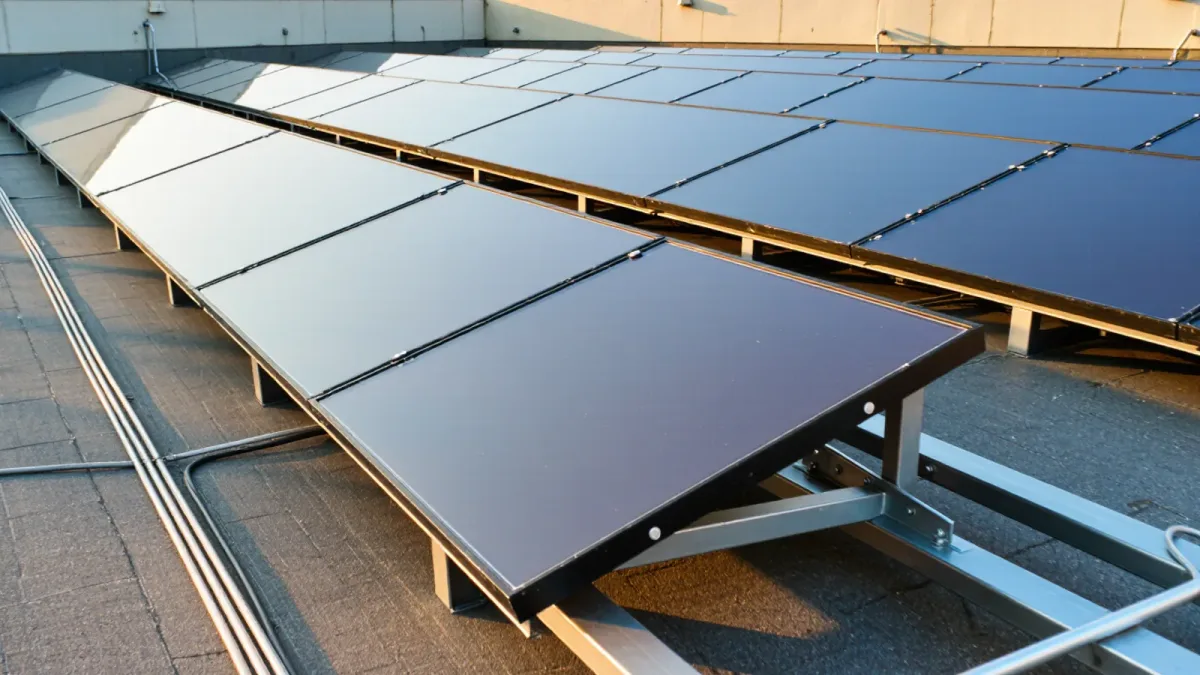
The PPA is a power contract stapled to the roof. Its load-bearing terms: the rate and its escalator — most contracts start below retail and escalate 1 to 3 percent annually, so the saving is a spread that must be projected against the utility's own rate trajectory. The term and its transfer provisions, because the hotel will likely change owners, managers, or brands inside twenty years, and the contract must survive all three. Early-termination formulas, which decide what a sale or a roof replacement costs the deal. And the roof itself: the developer's access rights, penetrations, warranty interactions, and who re-roofs around an array at year twelve.
Properties financing expansions should read the interplay with debt: lenders to the hotel will want the PPA subordinated or assumable, and the negotiation over that paragraph is routine on both sides.
When does a hotel's roof fit solar?
Four conditions. Load: a full-service property runs high daytime consumption that matches solar output; a lightly loaded seasonal resort may export most of its generation at prices the tariff does not reward. Roof: age and structure — solar should follow a recent roof replacement, not precede one. Tariff: the local utility's rates and net-metering or export rules decide the value of every kilowatt-hour the system produces; identical arrays earn differently across utility territories. And siting: shading from adjacent towers, mechanical equipment, and historic-district constraints have killed more hotel solar projects than pricing has.
What does the sustainability report actually get?
Generation from an on-site PPA is real, metered, scope-2-reducing electricity — among the strongest claims a hotel sustainability report can make, because it is verifiable from the utility and inverter data rather than purchased as certificates. Against building-performance rules that price carbon, on-site generation cuts the taxable line directly, and the same metered output feeds certification audits from LEED O+M to Green Key without further documentation work. Operators should nonetheless resist claiming the array's full nameplate capacity in guest communications; the reportable figure is metered generation, which the PPA's monitoring portal supplies monthly.
For operators, a PPA is a below-market electricity contract with a roof lease inside it; the panels are the developer's problem, but the contract is the hotel's for twenty years.
The evaluation that matters happens before any developer is chosen: twelve months of interval utility data, a structural roof assessment, and the local tariff's export rules. Properties that arrive at the PPA negotiation with those three documents negotiate on facts; properties that arrive on a brochure negotiate on the developer's numbers.