Linen reuse — the opt-in program that skips re-washing towels and bedsheets left in usable condition — is the one sustainability measure nearly every hotel already owns, costs almost nothing to run, and cuts laundry volume, water, energy, and linen wear in the same stroke. Because laundering is one of the largest water uses in a hotel's operations, alongside guest bathrooms and kitchens, per the EPA's WaterSense program, the reuse decision directly moves the two biggest utility lines attached to housekeeping: water and labor.
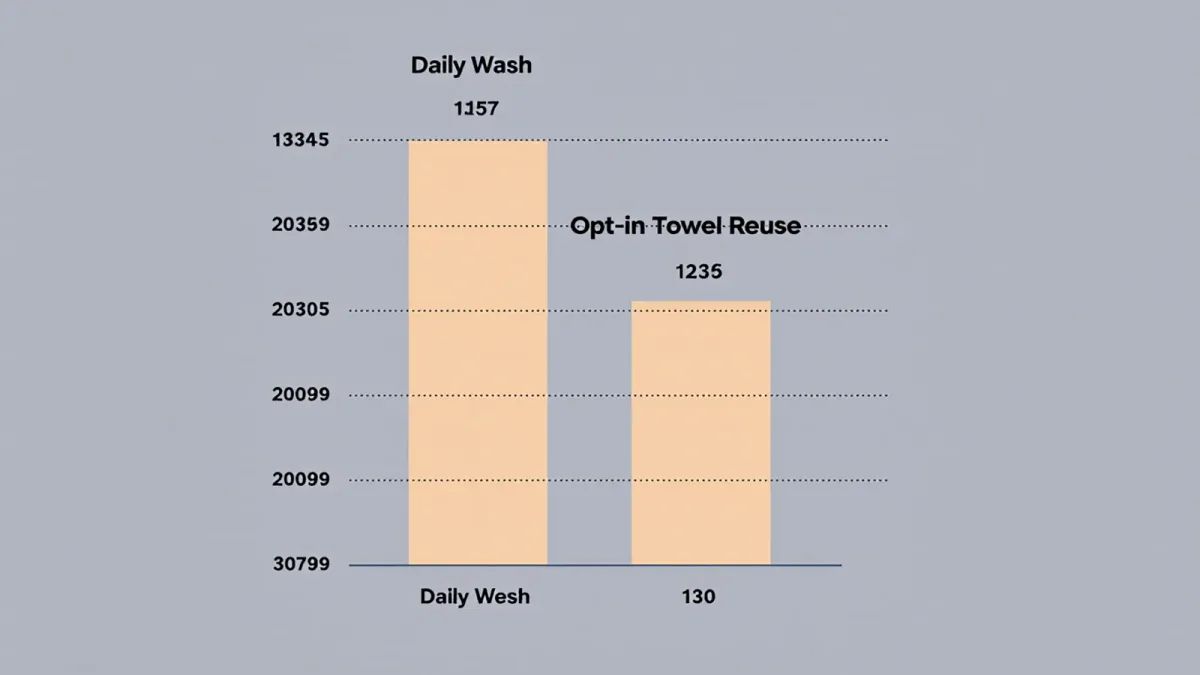
The catch is participation. A reuse program's savings equal its opt-in rate multiplied by the avoided washes, and opt-in rates reported across industry pilots vary so widely with card design, housekeeping staffing, and brand messaging that two identical properties can run the same program at very different results.
How much water does laundry actually use?
In US Environmental Protection Agency commercial water benchmarking, lodging is consistently among the most water-intensive commercial building types, and laundry typically ranks behind only bathrooms and kitchens. A full wash-and-dry cycle for a room's terry and sheets consumes water, gas for hot water and dryers, electricity, detergent chemistry, and machine cycles that also age the fabric. Each avoided cycle saves the whole stack, which is why reuse shows up in utility bills within a single billing period when participation is high.
What drives guest opt-in?
Three mechanics recur in the programs that work:
- A clear action-consequence sign. Signs that state what happens if the towel is hung up — it is not washed — outperform generic earth-tone appeals. The guest must know the signal is read.
- Housekeeping compliance. The program breaks when a hung towel is replaced anyway. Verification belongs in the room checklist, and the changeover standard (replace towels on the floor, leave hung towels) must be written into the brand or SOP documentation, not left to individual room attendants to interpret.
- Multi-night framing. Framing reuse as the default for stays of two or more nights, with a single card on arrival rather than daily re-asking, removes the daily decision that drives opt-out.
Multi-night framing matters commercially as well as environmentally: a guest who opted in once should not be re-asked every morning, which reads as nagging and depresses participation on long stays.
What are the actual limits of the program?
Two. First, hygiene perception: sheet reuse is a harder sell than towel reuse, and many chains restrict sheet reuse to stays beyond a threshold number of nights. Second, labor interpretation: reuse only saves labor if the room attendant's assignment count reflects skipped washes; if assignments are fixed regardless, the property saves water and chemistry but not minutes. Operators who want the labor saving need to adjust room quotas for opt-in stays, which requires PMS-housekeeping integration that not all properties have configured.
Does linen reuse hurt guest satisfaction?
The measurable signal runs the other way. Because participation is opt-in, the guests who reuse are the guests who chose to, and dissatisfaction concentrates among guests whose hung towels were replaced inconsistently — a compliance failure, not a program failure. The satisfaction risk in reuse programs is inconsistency: a guest whose towels are replaced on day two but not day three reads the property as sloppy. Consistent execution of a written standard is the entire program.
How does reuse fit the wider water program?
Reuse is the entry rung of a water ladder that continues with low-flow fixtures, ozone or low-temperature laundry chemistry, and leak detection — measures with real capital costs. The reuse program's value beyond its own savings is the baseline: a property that knows its participation rate and per-occupied-room water figure has the measurement discipline the larger investments require, and a story for the sustainability report that is verifiable from utility data rather than projections.
For operators, linen reuse is not a marketing gesture; it is a utility-control program with a signage budget, and it should be measured like one.
The reporting discipline is simple enough to start this quarter: laundry water per occupied room before and after the program, participation sampled by room audit, and housekeeping minutes per opt-in stay. Properties that log those three numbers can defend the program to a franchisor, an investor, or a certification auditor — the three audiences most likely to ask.