A dietary request at a hotel is a chain of custody problem: the guest flags a need at booking or at the table, the server records it accurately, the kitchen prepares and plates it separately, and the banqueting or breakfast line does not undo the work of the restaurant. Celiac disease, food allergies, religious requirements, and lifestyle diets all travel this same chain, and the failure mode is nearly always the same one — accurate information lost between two stations. Food allergies affect a measurable share of adults, and for the guest with a genuine medical constraint, the hotel restaurant is not a convenience; it is the only food supply for the length of the stay, often with a conference banquet and an airport breakfast inside the same four days.
Regulators have already set the labeling baseline on packaged goods — the FDA's gluten-free labeling rule defines what that claim means on a product, which is why kitchens can buy certified ingredients but must still control cross-contact themselves. The hotel kitchen owns the part of the chain no supplier label can cover.
What should guests communicate, and when?
Twice, minimum. In the reservation: chain booking flows have a dietary field, and banquet-driven stays — weddings, conferences — must get the request to the event team weeks ahead, because a plated function for three hundred is portioned to the counts the kitchen was given. And again at the table, out loud, by name: "severe peanut allergy," "celiac, not a preference," "shellfish allergy, epinephrine carried." Guests with medical constraints should name the constraint rather than the workaround — "no croutons" hides celiac disease, and the kitchen that hears "allergy" deploys its cross-contact procedure while the kitchen that hears "preference" does not.
Guests carrying epinephrine should mention it; it signals severity to staff and shapes how the kitchen documents the ticket.
What should the kitchen's process look like?
The disciplined version is short and written down. One intake point: the server records the need verbatim on the ticket, flagged visibly in the kitchen display. One verification step: the cook confirms the dish's components against an allergen matrix — a table of every menu item against the major allergens, updated when menus change, which is the single highest-value document a food-and-beverage team can maintain. One plating protocol: dedicated pans, utensils, and glove change for allergy tickets, with the runner told which plate is which. And for banquets, one reconciliation: the event's dietary count checked against the plates the kitchen actually produced, before service, not after.
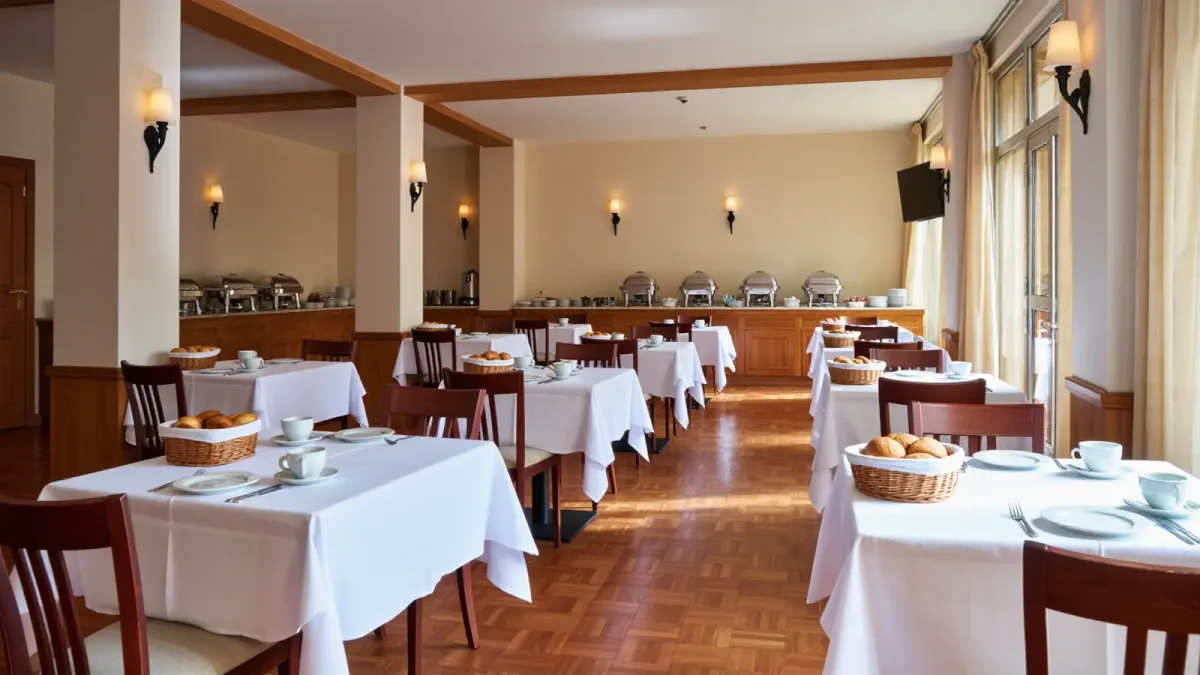
Breakfast buffets are the weakest link in most hotels: shared tongs across bins, crumbs migrating between dishes, and a guest reading labels on bulk items. Properties that solve the buffet do it with spacing, dedicated serving pieces per bin, and a staffed station for allergy guests rather than a sign.
Which requests are medical and which are preference — and does the kitchen treat them differently?
Operationally it should not matter much, but verification does. Religious requirements such as halal and kosher involve sourcing certified products, not just avoiding pork or alcohol — a kitchen cannot make a non-certified ingredient compliant by leaving something out. Celiac disease requires controlling cross-contact, which is categorically different from cooking without wheat. Lifestyle diets — vegan, low-carb, elimination diets — are preference territory where the kitchen's obligation is a real option rather than a salad with the chicken removed. Properties that maintain the allergen matrix for the medical cases usually discover it answers the preference cases for free.
What happens when a reaction occurs on property?
The sequence is medical first: emergency services for any systemic reaction, assistance retrieving the guest's epinephrine, a trained responder if the property has one, and an incident report written the same night while details are fresh. The incident report is not paperwork armor; it is the record that drives the kitchen's corrective action — which dish, which station, which step failed — and properties that skip it repeat the failure. Front-of-house teams benefit from formal allergen training, and several jurisdictions have enacted food-allergy awareness requirements for food service, making training both a liability measure and, in some markets, a compliance item.
For operators, dietary handling is one process with many entry points; the allergen matrix and the buffet layout do more for these guests than any menu icon ever has.
The commercial case needs no exaggeration: a guest with a medical dietary constraint who is handled well once becomes a booking habit for the whole household, because their restaurant choices are constrained everywhere, not just here. Reliability, once demonstrated, is remembered at the next booking screen.